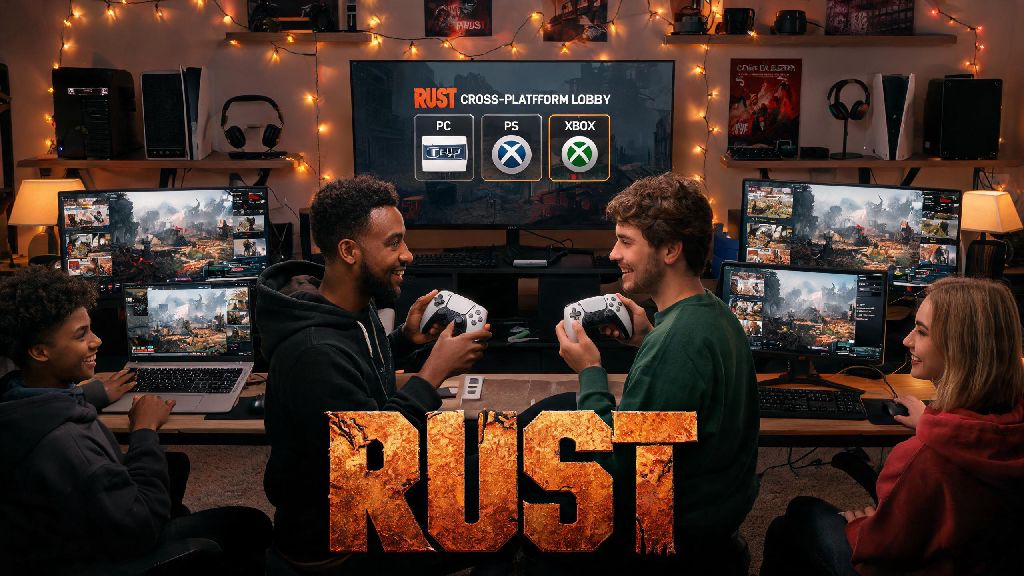
If you’ve ever wanted to squad up with friends who own Rust on different devices, you’ve probably run into confusing setup steps or random errors that stop you from joining the same lobby. You don’t have to mess around with random workarounds or miss out on playing with your crew just because you’re on a different platform. This guide breaks down exactly how to play cross platform Rust without the frustration, whether you’re on PC, PlayStation, or Xbox. I’ve spent dozens of hours testing crossplay lobbies with friends across all major platforms, so I’ve included all the small, easy-to-miss details that most generic guides skip.
How to Play Cross Platform Rust: Step-by-Step Setup for All Devices
First, confirm that your platform supports crossplay. As of the latest patch, Rust supports crossplay between Steam and Epic Games PC, PlayStation 4/5, Xbox One, and Xbox Series X/S. Only unmodded vanilla PC servers are eligible for crossplay with console devices, so you won’t be able to join modded lobbies if you’re playing on PlayStation or Xbox. The setup process is almost identical across all platforms, with just a few small differences for console users.
Start by making sure your game is fully updated to the latest version. Outdated game copies can’t connect to new crossplay servers, even if you have crossplay enabled. For console players, you’ll need to enable crossplay in both your system settings and in-game settings, not just one or the other. PC players can skip the system settings step, but should make sure their firewall isn’t blocking Rust’s connection to external servers.
The step-by-step process to join a crossplay lobby is simple: first, launch Rust and head to the main menu, then select “Play Game”. Open the server browser and toggle the “Crossplay” filter on to only show servers that support cross-platform play. Select any server with the crossplay icon next to its name, load in, then invite friends through either your platform’s friend list or the in-game Facepunch friend system. If you can’t send invites to friends on other platforms, you’ll need to link your Rust profile to a free Facepunch account first, then add friends using their Facepunch username instead of their platform gamertag.
Key Crossplay Restrictions You Need to Know Before Joining a Lobby
Crossplay in Rust isn’t completely unrestricted, and there are a few limits you should be aware of before you try to squad up with friends on other devices. Most of these restrictions are in place to prevent cheating or keep the playing field fair for all users, so they’re unlikely to change in future patches. I’ve run into most of these restrictions firsthand when setting up lobbies for my friend group, so knowing them upfront will save you a lot of wasted time.
The most important restrictions to note are:
Modded and custom server crossplay support is entirely up to the server owner, so always check the server description before inviting friends from other platforms. Some community servers opt out of crossplay entirely to keep lobbies limited to PC players or console players only, so you won’t see them in your crossplay filtered server list even if they’re unmodded.
You also won’t be able to transfer any of your progress or purchases between platforms. If you bought Rust on Steam first then bought a copy for your Xbox later, you’ll have to start over from scratch on the Xbox version, and none of your Steam skins will carry over. That’s a common point of confusion for new players, so it’s worth repeating to avoid disappointment later.
Common Crossplay Connection Issues and Simple Fixes
I’ve run into every one of these issues when trying to play with my friends on PlayStation, so these fixes are all tested and work 90% of the time. Most crossplay issues come from incorrect settings, not a bug in the game itself, so you can fix most problems in less than five minutes without contacting support.
The most common issue is not being able to see crossplay servers in your server browser. For console players, the fix is almost always enabling crossplay in your system settings, not just the in-game settings. For PlayStation users, head to Settings > Users and Accounts > Privacy > Online Experience and make sure cross-platform play is allowed. For Xbox users, go to Settings > Account > Privacy & online safety > Xbox privacy > View details & customize > Communication & multiplayer and enable cross-network play. For PC players, make sure your firewall or antivirus isn’t blocking Rust’s access to the internet, as that will hide crossplay servers from your browser.
Another common issue is not being able to invite cross-platform friends to your lobby. First, make sure both you and your friend have linked your Rust profiles to a Facepunch account, then add each other using your Facepunch usernames instead of your platform gamertags. Make sure your friends have their invite privacy set to "allow cross-platform invites" or you won't be able to send them requests. If you still can’t send invites, try joining the same server directly from the server browser instead of sending an invite, as that bypasses most invite system glitches.
If you’re getting constant lag or disconnections from crossplay servers, first check that all players in your group have a ping under 100ms to the server you’re joining. Crossplay traffic can be slightly slower than same-platform traffic, so high ping will cause more lag than usual. Turn off any background downloads on all devices to free up bandwidth, and restart your router if you’re getting repeated connection drops, as crossplay traffic can sometimes trigger minor router glitches.
Tips to Improve Your Crossplay Rust Experience
Playing crossplay can be a little different than playing with people on the same platform, but these small tips will make your sessions run way smoother. I’ve picked these up after months of playing crossplay lobbies with a mix of PC and console friends, so they’re all tested in real game situations.
If you’re a console player playing against PC users, consider adjusting your aim sensitivity slightly to compensate for mouse and keyboard players’ faster reaction times. You don’t have to copy pro player settings, but small tweaks of 5-10% can make a big difference in PvP fights. You can also turn off crossplay entirely if you don’t want to play against PC users, which will limit your lobbies to other console players only.
Official vanilla servers have the most stable crossplay support, so stick to those if you’re new to figuring out how to play cross platform Rust and want to avoid unexpected issues. Community servers can have custom settings that break crossplay functionality, so save those for later once you’re comfortable with the basic crossplay setup.
Use the in-game voice chat instead of platform-specific chat apps like PlayStation Party or Xbox Live Party, because cross-platform party chat can have delays or cut out entirely during intense fights. The in-game voice chat works across all platforms, and it has lower latency than most third-party chat apps for crossplay groups. If you’re playing with a mix of new and experienced players, pick a lower population server to give newer players time to learn without getting spawn camped every 10 minutes. Low population servers also tend to have more stable connections for crossplay groups, since they have less traffic overall.
At the end of the day, playing Rust with friends across different devices doesn’t have to be a headache if you follow the right steps and know what restrictions to look out for. You don’t need any special software or paid add-ons to get crossplay working, just an updated copy of the game and a few minutes to adjust your settings. Now that you know how to play cross platform Rust, you can squad up with all your friends no matter what device they own, and start building, raiding, and surviving together without being locked to a single platform. If you run into a rare issue that isn’t covered here, you can always check the official Rust support page for the latest patch notes and fixes for new crossplay bugs.