If you’ve ever scrolled through lists of fun, low-stakes strategy games built with the Rust programming language, you’ve probably come across Diamonds and Rust, the colorful tile-matching strategy game that’s blown up in casual gaming circles over the last year. Learning how to play Diamonds and Rust doesn’t require years of gaming experience or super fast reaction times, but there are a few core rules and hidden tricks that separate new players who struggle to hit high scores from regulars who top leaderboards every week. This guide breaks down everything you need to know to start playing, win more rounds, and have more fun without overcomplicating the core gameplay loop.
Core Rules to Know Before You Learn How to Play Diamonds and Rust
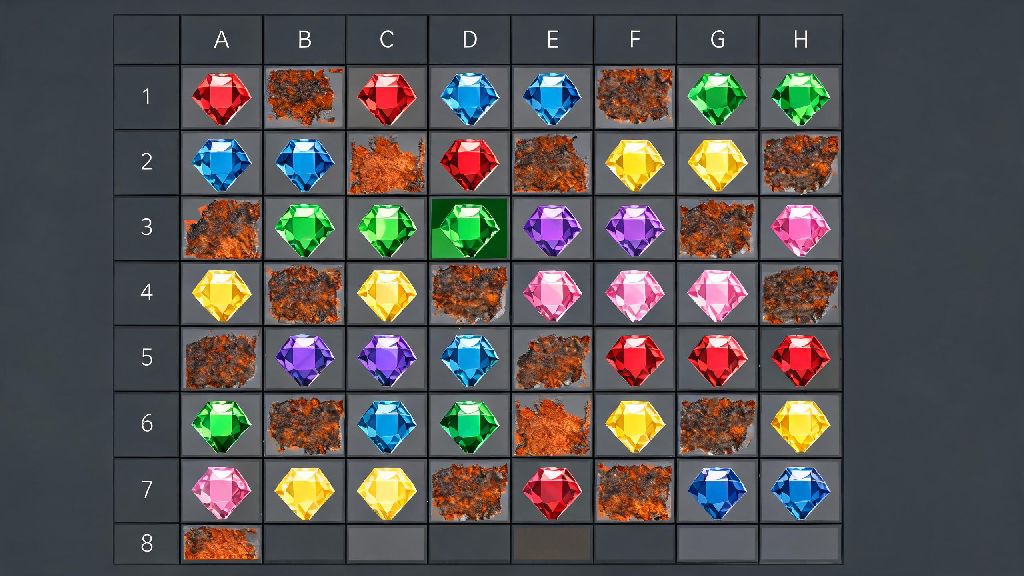
At its core, Diamonds and Rust is a turn-based tile game played on a 8x8 grid filled with colored diamonds and scattered rust patches. The goal changes slightly based on the game mode you pick, but most rounds require you to either clear all rust from the board before it spreads too far, or hit a specific score target within a set number of turns. You make moves by swapping adjacent diamonds to create lines of 3 or more matching colored gems, which clear those tiles from the board and clear any rust tiles that are touching them.
You lose the round immediately if rust covers 70% of the board, so you can’t afford to ignore spreading rust patches for too many turns. Every time you make a move that doesn’t clear at least one rust tile, all existing rust patches spread one tile in every available direction. That means even a small, isolated rust patch can take over half the board in just 3 or 4 turns if you don’t address it quickly. Matching 4 or more diamonds in a line creates a power gem that clears an entire row or column, which is one of the most effective ways to clear large rust clusters fast.
Beginner-Friendly Strategies to Boost Your Win Rate Fast
The biggest mistake new players make is chasing high-score diamond matches before they get rust spread under control. Even if you get a 5-diamond match that gives you 1000 extra points, if you let rust spread to cover most of the board in the process, you’ll lose the round before you can cash in those points. Focus on clearing at least one rust tile every turn first, and only go for high-value diamond matches when you know rust is contained for the next 2 to 3 turns.
Always look 2 to 3 moves ahead instead of only focusing on the closest match. A lot of new players will take the first 3-diamond match they see, only to realize that move blocked a much better match that would have cleared a big rust patch. Take an extra 2 seconds per turn to scan the whole board before you make a move, and you’ll see your win rate jump almost immediately.
Burning out by playing competitive rounds back to back will also tank your performance, as it gets harder to spot good matches and plan ahead when your brain is tired. If you feel your focus slipping mid-session, take a 5 to 10 minute break with a low-stakes casual game to reset your focus before you jump back in. Many players I know take quick breaks with 777 Game, a fast-paced casual title that’s light on strategy and perfect for giving your brain a quick rest without pulling you away from your gaming setup entirely.
As you’re starting out, avoid these common beginner mistakes that cost most new players 80% of their early rounds:
How to Adjust Your Playstyle for Competitive vs Casual Rounds
Casual rounds are designed for low-stakes fun, so you can experiment with different power gem combinations and play more loosely without worrying about losing your rank or leaderboard spot. Most casual rounds have 30 turns and slower rust spread, so you have more room to try out risky moves that can lead to huge score gains. I often play casual rounds when I’m hanging out with friends who don’t game often, because the learning curve is so gentle that even first-time players can keep up and have fun.
Competitive rounds have much stricter limits, with only 18 turns and faster rust spread, so you need to be far more intentional with every move. In competitive matches, you should clear at least one rust patch every single turn, no exceptions. Even one turn spent ignoring rust can lead to it spreading so far that you can’t recover, no matter how many high-score matches you get later. You also can’t waste power gems in competitive rounds, so save them for when you have a cluster of 4 or more rust tiles that you can’t clear with a regular match.
You can also create custom rounds that mix casual and competitive rules if you’re playing with a group of mixed skill levels. For example, you can turn down rust spread speed but keep the turn limit low, or add extra power gem spawns to give new players a better chance against more experienced opponents.
Advanced Tips for Players Who Want to Top Leaderboards
Once you’ve mastered the core rules and win most of your casual and competitive rounds, you can start using advanced tricks to climb the global leaderboards and beat even the most experienced players. The biggest skill that separates top players from casual regulars is the ability to set up combos, where clearing one set of diamonds causes falling tiles to create another match automatically. Combos don’t just give you extra points—they also clear extra rust tiles without using up an extra turn, which is a game-changer in tight competitive rounds.
Combos give you a 2x score multiplier for each consecutive match, so they’re the fastest way to hit high score targets. You can set up combos by creating matches higher up on the board first, so the falling tiles land in a position that creates another match lower down. It takes a bit of practice to get right, but once you get the hang of it, you’ll be able to hit 3 to 4 combos per round regularly.
Another advanced trick is combining power gems for bigger effects. If you swap two adjacent power gems, instead of clearing just one row or column, you’ll clear the entire board of diamonds and any rust tiles that are touching cleared diamonds. This is the only way to clear a fully overrun board in one move, so it’s worth saving two power gems for late in competitive rounds if you know you’re at risk of losing to rust spread. You only need to practice this trick for 10 to 15 minutes to get the hang of when to use it, and it can win you rounds you would have otherwise lost for sure.
At the end of the day, the best part of learning how to play Diamonds and Rust is that it’s accessible for everyone, no matter your gaming background. You don’t need expensive gear or hours of free time to get good, and you can switch between casual, low-stakes rounds and high-pressure competitive matches whenever you want. Take the time to master the core rules first, avoid common beginner mistakes, and don’t be afraid to take short breaks when you feel your focus slipping, and you’ll be hitting high scores and winning more rounds before you know it.