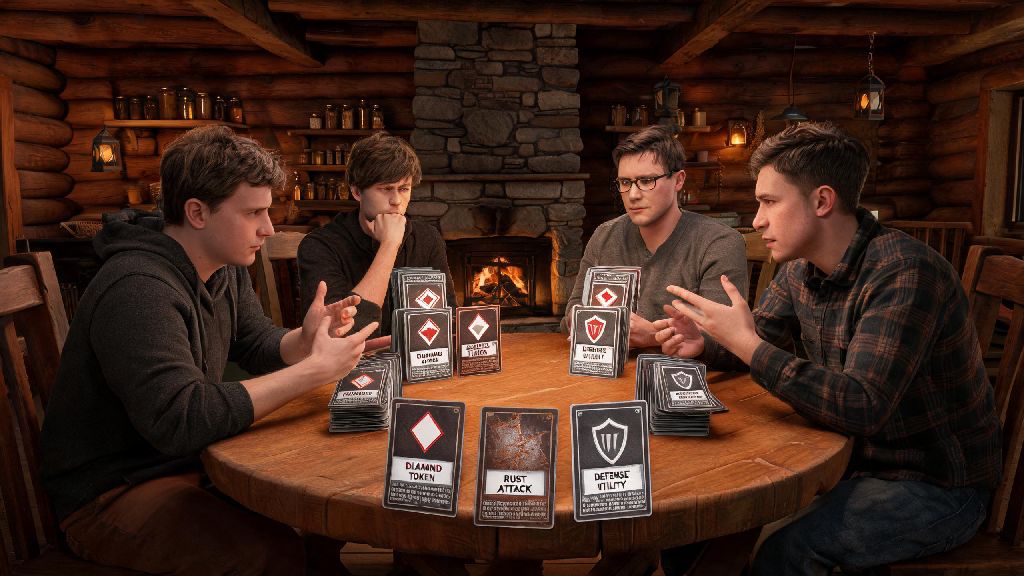
If you’ve stumbled across the viral strategy card game taking the Rust casual gaming community by storm, you’re probably curious how to play diamonds and rust without fumbling through your first three matches. It’s a deceptively simple mix of resource management and bluffing that works for both 10-minute quick plays and longer tournament-style sessions with friends. Unlike more complex Rust spinoff games, you don’t need hundreds of hours of base-building experience to pick up the core rules in under 15 minutes.
Core Rules You Need to Know to Play Diamonds and Rust
All matches start with 2 to 6 players, each given 5 diamond tokens, 3 basic rust attack cards, and 2 defense utility cards. The shared draw deck has 60 total cards split between diamond gain cards, higher-tier rust attacks, special defense cards, and wildcard utility cards. The win condition is either collecting 10 total diamonds in your public stock, or forcing all other players to run out of usable rust and defense cards so they can no longer block your attacks. Each turn follows three simple steps, and skipping or mixing up these steps is the most common reason new players get penalty points early on:
One common mistake new players make is hoarding too many defense cards early on. It’s better to use small rust attacks to chip away at opponents’ diamond stocks first, rather than saving all your cards for a big play that might never come. If you burn through all your attack cards in the first three turns, you’ll be left defenseless when other players start targeting you once they get close to the 10-diamond threshold.
Beginner-Friendly Winning Strategies for New Players
You don’t have to memorize hundreds of card interactions to win most casual matches. For new players, sticking to a simple, consistent playstyle will get you more wins than trying to pull off complicated, high-risk plays that rely on lucky draws. Aggressive play works best for small 2-3 player lobbies, while defensive, resource-focused play is far more effective for 4+ player games where you have multiple opponents to watch out for.
If you want to practice your decision-making skills without risking losing your ranked progress, you can test different playstyles in casual, no-stakes lobbies first. Many players also take short breaks between practice matches to refresh their focus, as long sessions can lead to sloppy misplays that cost you wins. Casual players who need a quick, low-stakes distraction between ranked rounds often play 777 Game, a fast-paced casual title that fits neatly into 5-minute gaps without throwing off your strategy rhythm. You don’t want to burn out before your next tournament match, so taking short, low-effort breaks is a key part of consistent performance.
Another easy strategy for new players is to track which rust attack cards have already been played. The standard deck only has 12 rust attack cards total, so if 10 have already been used in the first half of the game, you can safely stop hoarding defense cards and focus on collecting diamonds to hit the 10-diamond win condition. Always pay attention to how many diamonds each opponent has in their public stock, so you can target the player closest to winning before they hit the threshold.
Common Mistakes to Avoid When You First Start Playing
Even players who memorize all the core rules often make avoidable mistakes that cost them their first few matches. The most common mistake is overusing rust attacks on players who are already low on diamonds. It’s a waste of a valuable attack card when you could be targeting the player who’s 1 diamond away from winning, or saving the card to block an incoming attack against yourself.
Forgetting to discard extra cards at the end of your turn is another easy mistake that adds up fast. The penalty for having 8+ cards at the start of your next turn is losing 2 diamonds, which can throw off your entire game plan if you were only a few diamonds away from winning. Never reveal what cards you have in your hand accidentally, even if you’re reacting to a good or bad draw. Bluffing is a huge part of the game, and even a small facial reaction can give opponents enough info to counter your next move.
Many new players also ignore utility cards because they think only attack and defense cards matter. Cards like "rust swap" that let you trade a rust card from your hand for a diamond card from an opponent can win you games when you’re one diamond short of the win condition, or when you’re overflowing with rust cards you don’t need. Don’t discard utility cards just because they don’t have an obvious immediate use — they often come in handy in the late game when most attack and defense cards have already been used.
How to Adapt Your Playstyle for Different Lobby Sizes
The same strategy that works for a 1v1 match will almost never work for a 6-player free-for-all lobby, so adjusting your playstyle to the number of opponents is one of the fastest ways to win more matches. In 1v1 matches, aggressive play almost always wins. You don’t have to worry about third parties attacking you, so you can spend all your early turns attacking your opponent’s diamond stock instead of saving defense cards.
For 3-4 player lobbies, you need to balance offense and defense. Don’t be the most aggressive player at the table, because everyone will target you first. Instead, let other players fight each other, then swoop in to take the win once most of their rust attack cards are used up. For 5+ player lobbies, forming loose temporary alliances can help you stay alive longer. You don’t have to stick to the alliance forever, but agreeing not to attack each other for the first 5 turns can keep you from being targeted early when you have no defense cards saved.
If you’re playing in a tournament lobby with ranked progress on the line, take 10 seconds before each turn to plan your move, instead of playing the first card that comes to mind. Rushed plays are the number one cause of losses in high-ranked lobbies, even for experienced players. You don’t have to win every game to climb the ranked ladder. Even finishing in second place in a 5-player lobby gives you more ranked points than finishing last, so sometimes it’s better to play conservatively instead of going all-in for a risky win.
Whether you’re looking for a casual game to play with friends on a weekend or a new ranked strategy title to grind, learning how to play diamonds and rust is well worth the small time investment. The rules are simple enough for new players to pick up fast, but there’s enough depth to keep you coming back for months as you learn new strategies and adapt to different playstyles. Start with casual lobbies to get the hang of the core rules, test different playstyles to find what works best for you, and don’t get discouraged if you lose your first few matches — even the top-ranked players lost dozens of games when they first started.