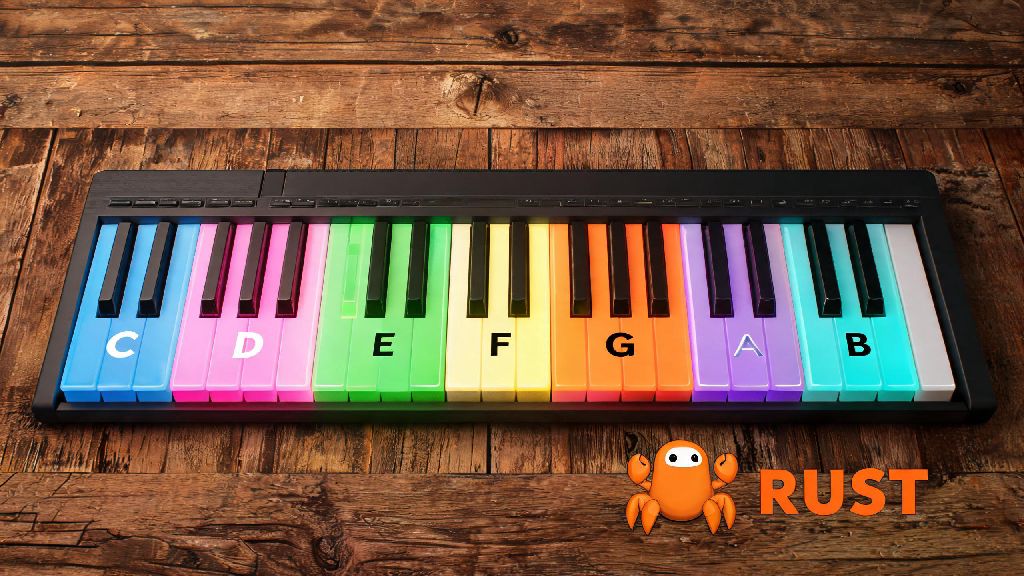
If you’ve ever dabbled in Rust side projects, you’ve probably noticed the fast-growing ecosystem of audio tools built for the language, from simple sound players to full digital audio workstations. One of the most surprisingly popular small audio projects in the Rust community is the virtual Rust piano, a lightweight, fast tool that lets you play piano sounds using your keyboard or MIDI controller. A lot of new Rust users assume you need advanced coding skills or years of music experience to mess around with these tools, but that couldn’t be further from the truth. Learning how to play music on rust piano is way more accessible than most people expect, even if you’ve never written a line of audio code or picked up a physical instrument in your life. This guide will walk you through everything you need to get started, play your first songs, and even customize your piano for your own personal projects.
What You Need to Get Started to Play Music on Rust Piano
First, it’s helpful to clarify what we mean by a Rust piano, since the term can be confusing for people who are new to the Rust audio space. A Rust piano is either a standalone open-source app built entirely in Rust, or a lightweight library you can embed in your own Rust projects that simulates a piano keyboard and outputs high-quality audio with minimal lag. Unlike heavy virtual pianos built for other languages, most Rust pianos take up less than 100MB of storage and use barely any CPU power, so they run smoothly even on older laptops. To get started, you’ll only need a few basic things:
You don’t need to pay for any software to get started, as 99% of Rust piano tools are completely open source and free to use for personal or commercial projects. You also don't need any prior music theory knowledge to get started, as most tools come with pre-loaded note maps and even demo songs you can play along with to build muscle memory. Most popular rust piano apps take less than a minute to install via Cargo, so you can be up and playing in no time. If you’re using a library instead of a standalone app, you’ll only need a few lines of code to get it up and running, no advanced Rust skills required.
Basic Controls and Note Mapping for Rust Pianos
Nearly all standalone Rust piano apps use your standard QWERTY keyboard as the default input method, just like most virtual pianos on other platforms, so you won’t need to buy any extra hardware to start playing. The default mapping for almost every tool is the same across the board, which makes it easy to switch between different Rust piano apps without having to relearn controls. The top row of your keyboard (Q, W, E, R, T, Y, U, I, O, P) maps to the white keys of the middle octave, while the number row above it (1, 2, 3, 4, 5, 6, 7, 8, 9, 0) maps to the black keys in that same octave. You can shift up or down octaves using the CTRL and ALT keys in most apps, which lets you access the full range of a standard 88-key piano without extra gear. Make sure to disable your keyboard's sticky keys feature before you start playing, otherwise holding down multiple keys at once to play chords will trigger accessibility shortcuts instead of playing notes. If you're using a rust piano library instead of a standalone app, you can adjust the key mapping to whatever layout works best for you, instead of being stuck with the default QWERTY setup. I’ve found that typing at a moderate pace works best when you’re first starting out; if you hit keys too fast you might get minor audio lag if your CPU is running other heavy programs in the background. You can adjust the audio buffer size in most Rust piano settings to fix this if it happens: smaller buffer sizes mean less lag but more CPU usage, so play around with what works for your specific setup.
How to Play Your First Full Song on a Rust Piano
When you’re first getting started, don’t jump into complex songs with fast melodies or lots of chords right away. Start with something super simple like “Twinkle Twinkle Little Star” or “Happy Birthday” that you already know the melody of by heart, so you don’t have to spend time memorizing new note sequences. Most Rust piano apps have a slow-down feature that lets you adjust the playback speed of demo tracks, so you can play along at your own pace until you get the hang of the key mapping. It helps to print out or pull up a simple note chart for your chosen song first, so you don’t have to stop and look up notes mid-playthrough. If you’re more comfortable with code than with a keyboard, you can also write simple programs that play songs automatically by passing a sequence of notes and durations to the Rust piano library. For example, you can write a 10-line Rust script that plays the entire melody of “Let It Be” without you touching a single key, which is a super fun way to show off a small Rust project to friends who don’t code. Some rust piano apps even have a record feature that lets you save your playthroughs as WAV files, so you can share your songs with other people online or use them as background music for your personal videos. A lot of new users try to play chords right away, but it’s better to master single-note melodies first before you start trying to play multiple keys at once. That way you build muscle memory for the key mapping first, so you don’t have to look down at your keyboard every time you want to hit a note.
Customizing Your Rust Piano for Personal Projects
One of the biggest perks of using a Rust piano instead of a regular virtual piano is that it’s completely customizable if you know even basic Rust, so you can tweak it to fit exactly what you need. You can change the sound of the piano to sound like a synth, a guitar, or even a 8-bit video game sound chip by swapping out the audio samples the library uses. If you're new to audio programming, start with pre-built sample packs instead of recording your own sounds first, as there are thousands of free, high-quality sample packs available online for every instrument you can think of. You can also add custom effects like reverb, delay, or distortion to your piano sound with just a few extra lines of code, which is perfect if you want to make original music for an indie game or a personal podcast intro. If you’re building a larger Rust project, like a game or a productivity app, you can embed the Rust piano directly into your app instead of using a standalone tool. For example, a lot of Rust game developers add playable pianos as Easter eggs in their games, letting players mess around with music when they’re not fighting enemies or completing quests. If you’re planning to distribute your custom Rust piano project, make sure any audio samples you use are licensed for commercial use if you’re selling your project, otherwise you could run into copyright issues down the line. There are tons of free, public domain piano and instrument samples available online that are completely safe to use for any project, personal or commercial.
So at the end of the day, you don’t need to be a professional coder or a professional musician to have fun making music with Rust tools. Learning how to play music on rust piano is a fun, low-stakes side project that lets you practice your Rust skills and get creative at the same time, even if you only have 30 minutes a week to mess around with it. Start with a standalone app first to get the hang of the controls, then move on to customizing libraries if you want to build your own projects. You might be surprised at how much cool stuff you can make with just a little bit of practice. I’ve personally made half a dozen silly little custom pianos for my friends over the years, and it’s still one of my favorite ways to mess around with Rust when I don’t feel like working on more serious work projects.