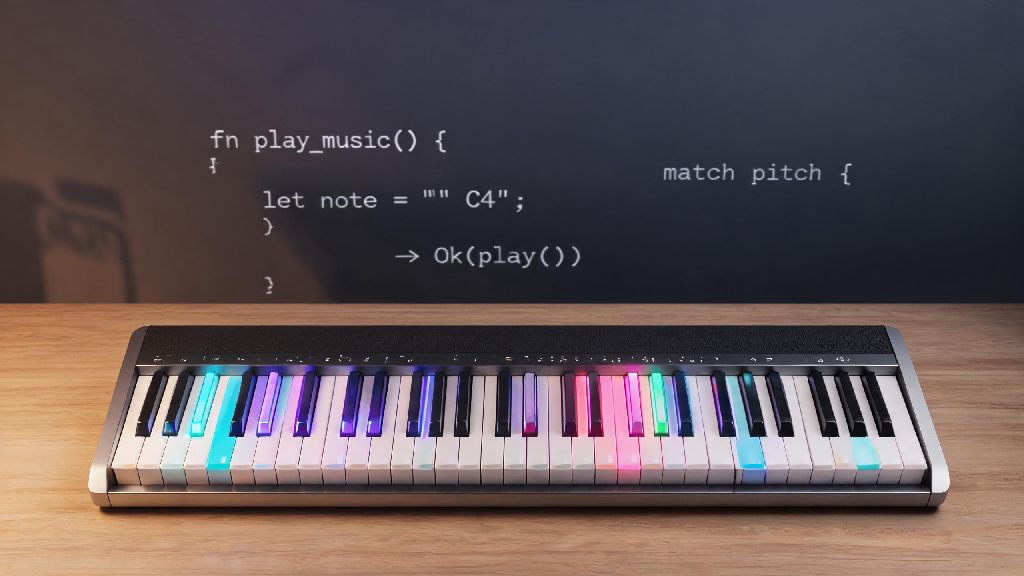
If you only associate Rust with systems programming, web backends, or high-performance tools, you’re missing out on one of the most fun uses for the language: creative coding projects. I first stumbled on audio programming in Rust when I was burnt out on work projects and looking for something low-stakes to build on a rainy Saturday. I had zero prior music production experience, and was shocked how little code I needed to get a working instrument up and running. If you’ve ever wanted to build something you can actually interact with and show off to friends, learning how to play piano in Rust is the perfect weekend project to stretch your skills without feeling like work.
What You Need Before You Learn How to Play Piano in Rust
You don’t need fancy equipment or advanced coding skills to build your Rust piano, but there are a few basic prerequisites to check off before you start writing code. The good news is most people will already have all of these on hand, so you won’t have to spend any money to get started. The only hard requirements are:
You’ll also need Rust 1.70 or later to use the latest versions of the audio crates we’ll rely on, plus any working audio output device of course. Basic familiarity with variables and functions in Rust is enough to follow along, you don’t need experience with traits, lifetimes, or other advanced Rust features for the basic version. I skipped the headphones my first time testing, and spent 20 minutes confused why my notes were echoing so badly before I figured out the issue. Don’t make that same mistake.
Setting Up Your Rust Piano Project Structure
Start by creating a new Cargo project with cargo new rust-piano, then open the Cargo.toml file to add your dependencies. We’ll use two core crates for the base build: cpal for audio I/O, and notefreq for pre-calculated piano key frequency values. cpal is the most widely used low-level audio I/O crate for Rust, maintained by the official Rust Audio organization so you don’t have to worry about it being abandoned any time soon. notefreq takes the guesswork out of calculating frequencies for standard piano keys, so you don’t have to memorize that A4 is 440 Hz or mess around with harmonic series math if you don’t want to.
Once your dependencies are added, you're ready to start writing the core logic that lets you play piano in Rust. For a basic version, you can fit all your code in main.rs, but if you plan to add extra features later, it’s worth splitting your code into separate files for note generation, input mapping, and audio output. One of the biggest perks of using Rust for this project is that the type system will catch mismatched sample rates or buffer sizes before you even run the code, so you won’t get random crashes mid-playback like you might in Python or JavaScript for similar projects. The only downside of using cpal for this project is that it's low level, so you have to handle a bit more boilerplate than you would with a higher level framework, but that extra control means you get far more consistent playback.
Mapping Keyboard Inputs to Piano Notes
Next, you’ll need to map your regular computer keyboard keys to corresponding piano notes, just like the virtual pianos you’ve probably used online. I recommend mapping the top letter row (Q, W, E, R, T, Y, U) to white keys, and the number row (1, 2, 3, 4, 5) to black keys for the middle C octave, which is the most intuitive layout for most people. We’ll use the device_query crate to listen for keyboard presses without needing to build a full GUI for the project.
You don't need a physical MIDI keyboard to use your Rust piano, though it's easy to add MIDI support later with the midir crate if you have one you want to hook up. Make sure you add logic to ignore repeated key press events that operating systems send when you hold a key down, otherwise you’ll get stuttering, repeated notes instead of a single sustained tone. You can also add simple velocity logic to make notes louder the longer you hold the key down, for a more realistic playing feel. When your input mapping is set up correctly, you'll be able to play piano in Rust with the same muscle memory you use for typing every day. I mapped my home row to the middle C octave first, and it took me less than 10 minutes to be able to play basic nursery rhymes without looking at my keyboard.
Troubleshooting Common Issues With Your Rust Piano
Even if you follow all the steps exactly, you’ll probably run into at least one small issue when you first test your piano, and most of them are easy to fix with a few small tweaks. Audio latency is the most common issue first-time builders run into, and it's usually fixed by reducing the buffer size in your cpal configuration. Just don’t set it too low, or you’ll get choppy playback on lower-powered machines that can’t process audio samples fast enough. Distorted notes are almost always caused by clipping, which happens when your sample amplitude goes above 1.0 or below -1.0, so make sure you're normalizing your sine wave output before sending it to the audio stream.
If you’re on Linux, you might need to install the ALSA development packages first to get cpal working properly, that’s a common gotcha I ran into on my old Ubuntu laptop, and I spent an hour digging through GitHub issues before I found the fix listed in the cpal docs. If your keys aren’t registering at all, double check that your input mapping code is using the correct key codes for your operating system, since key code values can vary slightly between Windows, Mac, and Linux.
At the end of the day, building a working instrument is one of the most rewarding small Rust projects you can tackle, and you don’t need advanced coding or music theory skills to pull it off. Once you have your basic version working, you can add all kinds of extra features, like reverb effects, recording functionality, or even a GUI with visual piano keys that light up when you press them. I’ve even seen people add multiplayer support so multiple users can play the same piano over the internet together. If you've been looking for a fun break from building APIs or command line tools, taking the time to learn how to play piano in Rust is the perfect way to mix creative fun with your Rust learning journey.