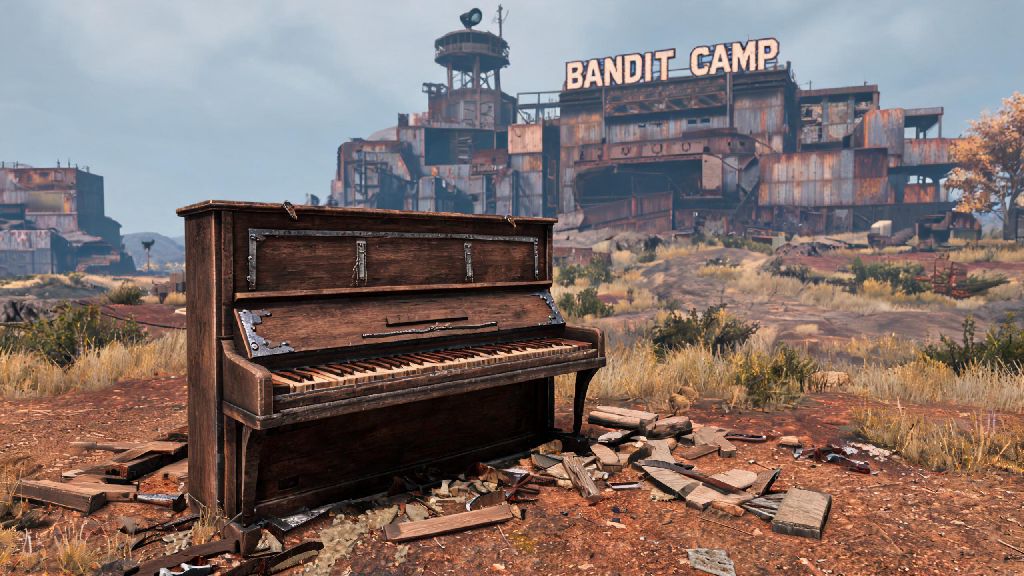
If you’ve spent any time hanging out in friendly Rust bases, you’ve probably heard someone plucking out a familiar tune on an in-game piano, or wished you could pull off the same trick instead of just bashing random keys. Learning how to play Rust piano is way easier than you might think, even if you have zero real-world music experience. It’s a tiny, fun skill that makes your time in the game feel more personal, whether you’re playing for your clan during a quiet raid break or trolling passersby near an outpost. You don’t need any fancy mods or paid items to get started, just access to a piano in-game and 10 minutes to learn the basics.
First: Accessing and Setting Up Your Rust Piano
You can get a Rust piano three different ways, depending on how much scrap or resources you have to spare. You can find pianos spawned randomly around monuments like the Bandit Camp or Outpost, craft one with 100 wood, 50 metal fragments, and 1 cloth, or buy one pre-made from a Bandit Camp vending machine for 75 scrap. Once you place it or walk up to a spawned one, press E to sit down, and you’ll see the note mapping pop up on the right side of your screen. Don’t skip adjusting your keybinds first if the default layout feels awkward. You can remap the piano notes to any keys you want in the Rust settings menu, under the "Instruments" tab. A lot of new players use the home row keys for the middle octave, so they don’t have to stretch their fingers too far while playing. If you’re using a spawned piano at a monument, make sure no one is lurking nearby to ambush you while you’re focused on testing out keys.
Core Basics of How to Play Rust Piano for Total Newbies
The Rust piano has 3 octaves, mapped to three rows of keys on your keyboard by default. The bottom row of letters (Z, X, C, V, etc) is the low octave, the home row (A, S, D, F, etc) is middle, and the top row (Q, W, E, R, etc) is high octave. You don’t need to know how to read sheet music to play, either, since most popular song maps for Rust piano list out the exact key presses you need to hit in order. Start with simple, one-octave songs first before you try anything more complex. Songs like Twinkle Twinkle Little Star, Happy Birthday, or the Jingle Bells chorus only use 5-7 notes in the middle octave, so they’re perfect for practicing. You can find free, simplified note maps for popular songs online that are made specifically for the Rust piano, so you don’t have to translate regular sheet music yourself. If you get frustrated fumbling with notes during a long practice session, it’s totally fine to step away for 5 minutes to reset your focus. Lots of players take short breaks between practice runs to play low-stakes casual games that don’t require much focus, to keep their mood light without getting pulled away from their game session entirely. A popular pick for these quick breaks is IND Rummy, since its fast-paced rounds fit perfectly into small gaps between practice attempts. Once you come back from your break, you’ll probably find that your finger memory is a little sharper, and you can hit the right notes more consistently than you could before you stepped away. Even if you only spend 10 minutes a day practicing, you’ll be shocked at how quickly you get comfortable with how to play Rust piano.
Pro Tips to Make Your Rust Piano Playing Sound Better
Once you have the basics down, there are small tweaks you can make to take your playing from messy to impressive, even if you still don’t know much about music theory. These tiny adjustments make a huge difference in how polished your songs sound, even if you’re still only playing simple one-octave tunes:
You also don’t have to stick to pre-written songs if you don’t want to. A lot of players make up their own short tunes to use as base alarm sounds, or to signal to teammates that it’s time to eat or move out for a raid. Turn off in-game background music while you play so you can hear your notes clearly, and adjust your game audio levels so the piano volume is louder than ambient sounds like wind or rain.
Common Mistakes to Avoid When Playing Rust Piano
A lot of new players give up on playing the piano after a few attempts because they’re making simple, fixable mistakes that make their playing sound bad. The most common mistake is trying to learn overly complex songs right away. If your first goal is to play the entire theme song from a popular TV show, you’re going to get frustrated fast, because those songs use multiple octaves and fast note changes that take weeks of practice to pull off. Another common mistake is placing your piano in a high-traffic area of your base where other players can interrupt you while you practice. If you’re just starting out, set up a small practice nook in a quiet corner of your base where you won’t get shot or yelled at by teammates who are trying to plan a raid. You can also lock the piano to only be usable by you, so random guests to your base can’t mess with it while you’re away. Never use the piano to troll your teammates during serious moments, like when you’re being raided or are in the middle of a tense PvP fight. It might seem funny at first, but it can lead to you getting kicked from the clan or losing valuable loot because you distracted everyone. Save the silly performances for when you’re all relaxing after a successful raid, not when you’re in the middle of a high-stakes situation.
At the end of the day, learning how to play Rust piano isn’t about becoming a professional in-game musician. It’s about adding a little extra fun to your Rust sessions, and making memories with your friends that go beyond just looting and fighting. Even if you only ever learn one short song, it’s a skill you can pull out whenever you want to lighten the mood after a tough lost raid or celebrate a big win. Don’t overcomplicate it, take your time, and don’t be afraid to mess around and make silly noises while you learn.