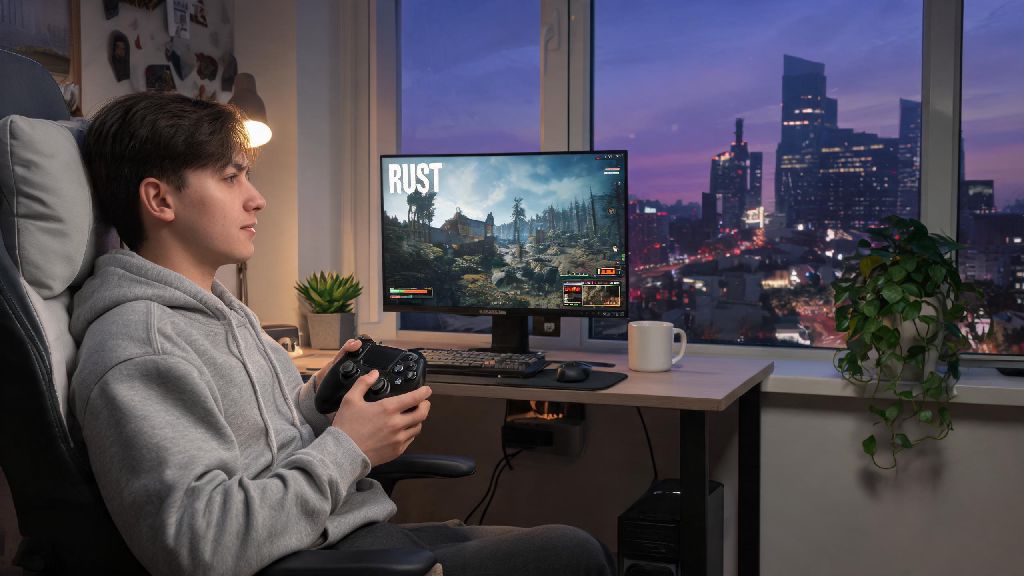
If you’ve ever sat down after a long day wanting to grind Rust without hunching over your keyboard and mouse, you’ve probably asked can you play Rust with controller in 2026. As someone who’s spent the last three years bouncing between PC and console playthroughs of the survival hit, I’ve tested every possible controller setup across both platforms to see what actually works, and what will leave you getting picked off by roaming clans before you can even craft a wooden spear. 2026 brings a few small but impactful updates to controller support that make the experience far smoother than it was even two years ago, so you don’t have to stick to M+K if that’s not your preferred playstyle. This guide breaks down everything you need to know, from official support status to custom mappings that will keep you competitive even against veteran mouse players.
Can You Play Rust With Controller on PC and Console in 2026? Official Support Status
First, let’s cut straight to the most common question: yes, controller support is natively available for both console and PC versions of Rust as of 2026. Console editions of Rust have shipped with controller support since launch, but PC players previously had to rely on third-party tools like Steam Input to get their controllers working, which often came with input lag or broken mapping for certain actions. The 2025 Rust Quality of Life update rolled out full native controller support for PC, so you can plug in a PlayStation, Xbox, or even Switch Pro controller and have it recognized immediately, no extra downloads required.
That said, not all controllers are created equal, and you’ll get the best experience with Xbox Series X/S or PlayStation 5 DualSense controllers, as these have official pre-built mappings optimized for 2026’s current game build. Third-party generic controllers will work, but you’ll likely have to manually map most actions yourself, which can take 10 to 15 minutes of tweaking before you’re ready to play. Many players new to controller play worry they won’t be able to keep up, but the 2026 updates make playing Rust with controller far more accessible than it used to be.
Step-by-Step Controller Setup for PC Rust in 2026
Setting up your controller for PC Rust takes less than 10 minutes if you’re using a first-party controller, and only a little longer if you’re using a generic model. I recommend doing this setup before you load into a server, so you don’t waste spawn time fumbling with menus while other players are looting nearby. Follow these steps for a seamless setup:
I’ve found that lowering your build mode sensitivity by 20% compared to your standard look sensitivity makes placing foundations and walls far more precise, which is a huge help when you’re trying to build a base quickly during a raid. If you’re using a DualSense controller, you can also enable haptic feedback for things like gun recoil and resource gathering in the 2026 settings, which adds a fun immersive touch that you won’t get with M+K. If you run into issues with your controller not being recognized, you can check the official Facepunch 2026 controller support FAQ for troubleshooting steps for rare controller models and known bug fixes.
Pros and Cons of Playing Rust With Controller in 2026
Before you ditch your M+K entirely, it’s important to weigh the upsides and downsides of playing Rust with a controller, especially if you play on high-population PvP servers where every split second counts. I split my playtime 50/50 between controller and M+K, so I’ve got a pretty good sense of where each input method shines. The biggest pros of using a controller include comfort during long play sessions, better movement control for running and climbing, and far less wrist strain if you play for 4+ hours at a time. It’s also a great option if you prefer playing Rust from your couch on a living room TV, rather than sitting at a desk.
That said, there are clear downsides you need to account for. Aim assist for controller in 2026 is tuned to be far less aggressive than it is for other survival games, so you’ll be at a slight disadvantage in long-range PvP fights against M+K players who can snap to targets faster. Building is also slower with a controller, even with optimized mappings, since you have fewer quick-access buttons than you do with a full keyboard. You also won’t be able to bind as many quick actions to single buttons, so you’ll have to use the in-game radial menu for things like healing and swapping weapons, which adds a small delay to those actions. For casual players who mostly play PvE or low-population community servers, these downsides are barely noticeable, but if you’re trying to compete in top-tier raiding clans, you’ll likely want to stick to M+K for high-stakes fights.
Tips to Stay Competitive When Playing Rust With Controller
Just because controller play has a few small drawbacks doesn’t mean you can’t hold your own against M+K players. I’ve pulled off multiple successful raids and wiped entire small clans playing exclusively with a controller, and these are the tips that made that possible. First, invest in a controller with back paddles if you can afford it. You can map actions like jumping, reloading, and opening your build menu to the back paddles, so you don’t have to take your thumbs off the analog sticks to perform those actions. This cuts down on so much wasted time, and closes the gap between controller and M+K reaction speed almost entirely.
Second, turn off aim smoothing in the controller settings. Many players leave this on by default, but it adds small input lag that makes it harder to track moving targets during close-range PvP. Third, practice building in a private creative server for at least an hour before you join a public PvP server. Get used to how the build menu works with your custom mappings, and practice placing quick 1x2 bases and wall edits until you can do it without thinking. You should also customize your radial menu to only include your most used items, like bandages, food, and your primary weapon, so you don’t have to scroll through dozens of items mid-fight. If you play on high-pop PvP servers, turn off controller vibration entirely when you’re in a fight, as it can throw off your aim during rapid gunfights. These small adjustments make playing Rust with controller feel far more intuitive, even for players who have only ever used M+K before.
At the end of the day, the choice between controller and M+K for Rust comes down to your personal playstyle and what you find most comfortable. If you’re a casual player who values comfort over top-tier competitive performance, or you prefer playing from your couch, you don’t have to wonder can you play Rust with controller anymore – the 2026 native support makes it a completely viable, fun way to experience the game. You might have a small learning curve at first, but with a few small tweaks to your mappings and settings, you’ll be able to build bases, fight raiders, and survive wipe day just as well as most M+K players. Don’t let anyone tell you you have to play with a certain input method to enjoy Rust – play what feels best for you.