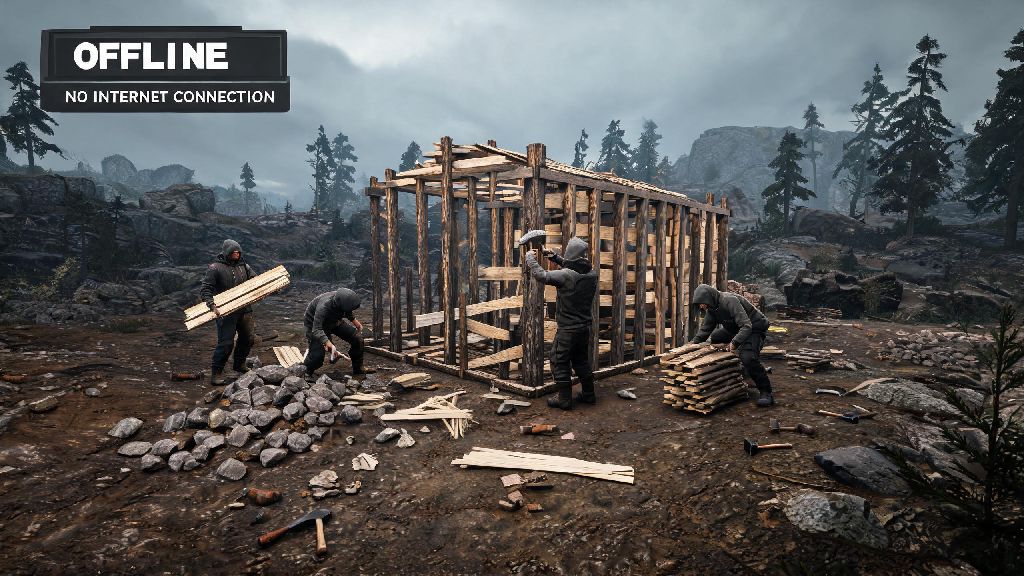
If you’ve ever been stuck on a long road trip with no cell service, or had your home internet cut out right as you were gearing up for a gaming session, you’ve probably wondered: can you play Rust without internet? Most players associate Rust with chaotic, PvP-heavy public servers where you fight dozens of other players for resources, but that doesn’t mean it’s the only way to enjoy the game. I’ve spent dozens of hours testing offline Rust modes over the years, both when my internet was out and when I just wanted a low-stakes way to practice building without getting raided every 20 minutes. This guide breaks down exactly what’s possible, what you’ll miss out on, and how to set up offline play if you decide it’s right for you.
Can You Play Rust Without Internet: Yes, Here’s How It Works
The short answer is yes, offline play is fully supported for all official copies of Rust on both PC and console platforms. You don’t need to jump through complicated hoops or pay for extra content to access it. The feature is built directly into the base game, designed for players who want to enjoy Rust without an internet connection or the pressure of online lobbies. When you play offline, you’re running a small, private server directly on your own device, so no external connection is required once the game is fully set up.
You don’t need any third-party mods or paid DLC to access offline Rust play, though you can add pre-downloaded mods if you want to customize your experience. The only catch is that you need to have the game fully installed and updated before you go offline. You can’t download the game or install patches without an internet connection, so it’s important to make sure everything is up to date if you know you’ll be without service soon. On PC, you can even use custom maps in offline mode as long as you download them to your device while you still have internet access.
Console players have the same access to offline play as PC players, though some older console versions may require a one-time update to unlock the single-player offline menu. If you don’t see the single-player option on your console main menu, just connect to the internet briefly to install the latest game patch, and it should appear right away.
Key Limitations of Offline Rust Play You Should Know
Offline Rust works great for specific use cases, but it’s not a 1:1 replacement for the online experience. There are some hard limitations you should be aware of before you decide to play offline, so you don’t end up disappointed. First, you can’t play with other people in offline mode. There’s no local split-screen or LAN play support for offline Rust, so it’s strictly a single-player experience. You also can’t join public or private community servers, so you won’t have access to custom game modes, roleplay servers, or any other community-created content that requires a connection to an external server.
Your offline progress won’t sync to your online account automatically, so you’ll need to manually back up your save files if you don’t want to lose your builds. If you want to move an offline base to an online private server later, you can export the save file and upload it to the server, but that process requires a small amount of technical know-how. You also won’t be able to access the in-game cosmetic store or claim any timed drops while you’re offline, though any cosmetics you already own will still be available for you to use in your offline session.
AI enemies like bears, wolves, and roaming scientists will still spawn in offline mode, so you won’t be completely without challenge. The core resource gathering, crafting, and building loops are exactly the same as online play, so you’re not missing any of the core survival mechanics. The only real differences are the lack of other players and the online-specific features we mentioned earlier.
Step-by-Step Setup for Offline Rust Play
Setting up offline Rust is incredibly simple, and it takes less than two minutes once you have the game fully installed and updated. The process is almost identical across PC and console platforms, with only small differences in menu layout. If you follow these steps, you’ll be able to jump into an offline session without any issues:
We recommend testing your offline setup once while you still have internet access, so you can fix any update or login issues before you’re stuck without service. The most common error people run into when trying to launch offline mode is a pending game update that they didn’t install while connected. If you get an error message when trying to launch single-player, just reconnect to the internet for a few minutes to install the latest patch, and you should be good to go.
On PC, you can also adjust advanced settings like map size, NPC spawn rates, and loot quality before you launch your offline session, so you can customize the experience to be as relaxed or as challenging as you want. Console players have a smaller set of customization options, but you can still adjust core settings like difficulty and resource abundance to match your playstyle.
Is Offline Rust Play Worth Your Time?
Whether offline Rust is worth playing depends entirely on what you want out of the game. If you’re a new player who’s still learning the core mechanics, it’s one of the best resources available. You can practice building bases, learning crafting recipes, and figuring out how to fight AI enemies without worrying about getting ganked by a fully geared veteran player 10 minutes after you spawn. I usually recommend new players spend at least 5 to 10 hours in offline mode before joining a public server, so they have a solid grasp of the game’s basics before they have to compete with other people.
Offline Rust is one of the best tools for new players to learn the game’s core loop without the pressure of online competition. Even experienced players can get a lot of use out of offline mode. I often use offline sessions to test new base designs before I build them on the public server I play on with my friends. Last year, I had a 3-day internet outage during a storm, and I spent almost the entire time building a massive, fully fortified base in offline Rust that I later moved to our private server. It held up against 3 separate raid attempts because I was able to test all the weak points and adjust the design while I was playing offline, with no risk of someone attacking me while I built.
If you’re only interested in the PvP or social aspects of Rust, offline play will likely feel boring and empty after a few hours. Half the fun of Rust for many players is the unpredictable interactions with other players, and you lose all of that when you play offline. It’s also not a good fit if you want to play with friends, since there’s no support for multiplayer in offline mode. But if you want to practice, experiment, or just have a low-stakes survival session when you don’t have internet, it’s absolutely worth trying.
At the end of the day, if you’re asking can you play Rust without internet, the answer is a resounding yes, as long as you go in with clear expectations for what the mode offers. It’s not a replacement for the chaotic, unpredictable online experience that made Rust famous, but it’s a fantastic option for practice, low-stakes fun, or playing when you don’t have access to a stable internet connection. Next time your internet goes out, or you just want to mess around with building a crazy base without worrying about raiders, give offline Rust a try – you might be surprised how much fun you have.