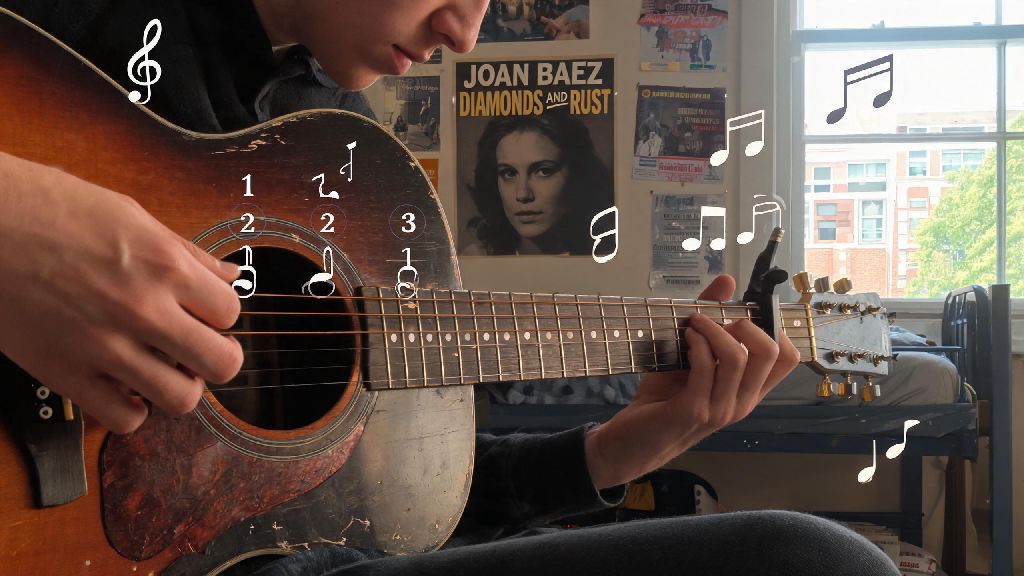
I first heard Diamonds and Rust blaring from my college roommate’s beat-up acoustic guitar freshman year, and I immediately knew I wanted to add it to my setlist. I dug through dozens of overcomplicated tutorials online that assumed I knew advanced fingerpicking and jazz chord inversions, and I almost gave up before I realized the core of the song is surprisingly accessible for almost any skill level. This guide breaks down exactly how to play diamonds and rust on guitar without the unnecessary fluff, so you can start playing along to the iconic Joan Baez track in as little as an afternoon.
How to Play Diamonds and Rust on Guitar: Core Chords You’ll Need First
The original Joan Baez recording is in F sharp major, but we’ll use G major fingerings for this guide to keep things simple for new players. If you want to match the original pitch exactly, just clip a capo on the first fret of your guitar, and all the fingerings stay the same. You only need five basic open chords to play the entire song, and all of them are standard chords most new guitarists learn in their first month of playing.
The full chord list is G, C, D, Em, and Am, with no tricky barre chords required for the basic version. If you struggle with the open G chord finger positioning, try using your ring finger on the 6th string 3rd fret, pinky on the 1st string 3rd fret, and middle finger on the 5th string 2nd fret – this setup makes switching to C and D chords far faster than the traditional three-finger G shape many teachers teach first.
We recommend practicing the chord progression for the verse first before you add strumming. The verse follows a simple G, C, G, D, Em, C, G, D pattern that repeats through every verse, so it’s easy to memorize after just a few run-throughs. Follow root-note priority when you first practice transitions, plucking the root note of each chord once before moving to the next to make sure you’re timing changes correctly.
Nailing the Iconic Strumming Pattern for Authentic Tone
Diamonds and Rust has a soft, lilting strumming pattern that’s far more about dynamics than speed, which is why so many new players accidentally make it sound too harsh or upbeat when they first try it. The song is in 4/4 time, and the basic pattern is down, down-up, skip-up, down-up, repeated for every chord in the verse and chorus. You’ll want to lean into the first down strum of each bar slightly, but keep all other strums soft to match the nostalgic, quiet tone of the original track.
If you use a pick for playing, we recommend sticking to 0.46mm or thinner picks for this song, as thicker picks will produce a harsher sound that clashes with the gentle vibe. You can also play the entire song fingerstyle if you prefer, using your thumb for the low root notes and your index and middle fingers for the higher three strings for a warmer, more organic sound that’s almost identical to Baez’s original recording.
Don’t stress if the strumming pattern feels awkward at first. I’ve had hundreds of students tell me this pattern took them a few days to get right, and the easiest trick to master it is to say the pattern out loud while you play, so you don’t accidentally skip a beat. The chorus uses the exact same strumming pattern as the verse, so you don’t have to learn a second pattern for the whole song.
Syncing Guitar Parts With Vocals (Common Mistakes to Avoid)
Most people learning this song plan to sing while they play, and syncing the guitar parts to the vocals is usually the trickiest part for new players. The lyrics move at a fairly conversational pace, so it’s easy to rush chord changes or slow down too much when you’re focusing on remembering the words. I’ve compiled the three most common mistakes I see new players make with this song, so you can avoid them before you build bad habits:
Pay extra attention to chord transition timing in the bridge, where the chord changes speed up slightly to match the building emotion of the lyrics. You don’t have to play the bridge exactly like the original, either – many players simplify the bridge progression to just G, D, Em, C if they’re still getting comfortable with faster changes, and it still sounds great.
So if you’re struggling to sync vocals and guitar, try playing the guitar part on loop while you sing without playing first, so you get used to how the lines line up with the chord changes. Most people find this cuts their practice time in half, compared to trying to do both at the same time from the start.
How to Adapt the Song for Your Skill Level
One of the best things about Diamonds and Rust is how flexible it is for players of all skill levels, so you don’t have to be an advanced guitarist to play a cover that sounds great. If you’re a complete beginner, stick to the basic open chords and the simple strumming pattern we outlined earlier, and skip any extra flourishes until you’re comfortable with the core structure.
If you’re an intermediate player, you can add small details to make your cover stand out, like soft hammer-ons on the G chord between verses, or a simple fingerpicked arpeggio pattern for the chorus instead of strumming. You can also move the capo up or down the neck to match your vocal range, since not everyone can hit the high notes Baez hits in the original recording. Personalized adaptation is what makes covers feel unique, so don’t be afraid to tweak the song to fit your style.
Advanced players can experiment with the original jazz-inflected chord voicings Baez uses on the studio recording, or add a simple fingerpicked solo for the interlude between the second chorus and the bridge. I’ve played this song at small coffee shop shows for years, and I usually swap the strummed chorus for a full fingerpicked arrangement to make it feel more intimate for small crowds.
At the end of the day, there’s no right or wrong way to approach how to play diamonds and rust on guitar, as long as you’re capturing the quiet nostalgia that makes the song so beloved by folk fans around the world. Start slow, focus on getting the chord transitions down before you add speed, and don’t be afraid to make small changes to fit your playing style. You’ll be able to play the full track for friends or small crowds before you know it, and it’s a great song to add to any acoustic setlist.