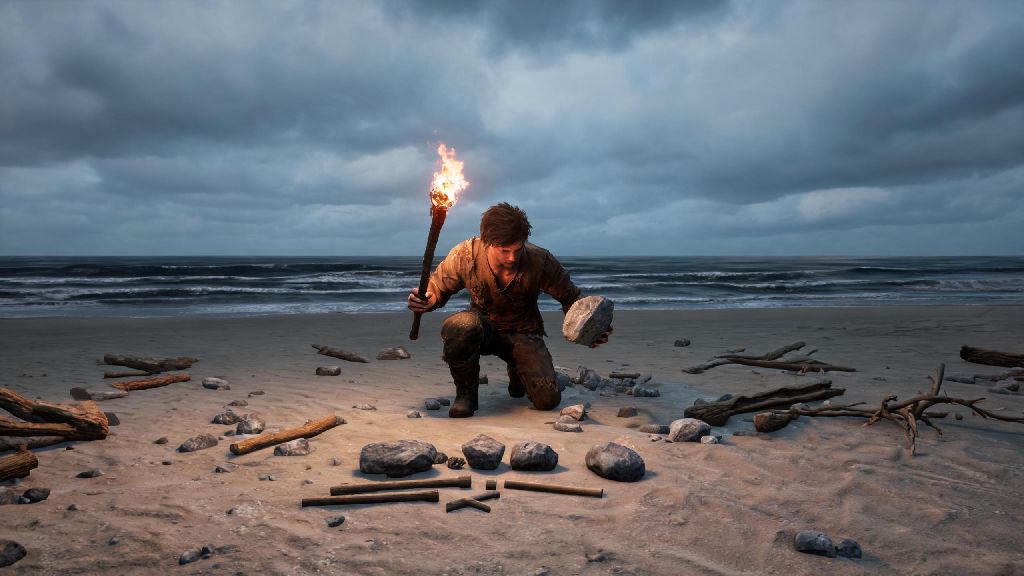
If you’ve ever spawned on a Rust beach with nothing but a rock and a torch, only to get taken out by a geared player 3 minutes later, you know how overwhelming this survival game can feel. Learning how to play Rust game doesn’t have to be a string of frustrating restarts, though. With a few core strategies and a willingness to learn from small losses, you can go from naked beach spawn to running a fully fortified base in just a few play sessions. You don’t need thousands of hours of experience to have fun, either — even casual players can carve out a safe spot on most servers if they stick to smart priorities early on.
Gather Core Resources Safely in Your First 30 Minutes
Your first half hour on a new server is the most critical, and misusing that time can lead to you losing all progress before you even get a base down. Start by hitting nearby trees and small rocks with your starting rock until you have 30 wood and 50 stone, then craft a stone hatchet and stone pickaxe to speed up gathering. don’t waste time hitting trees with your rock for more than 10 minutes — the tool upgrade cuts gathering time in half, so you can collect resources far faster.
Next, look for hemp plants growing in grassy areas to collect cloth. You’ll need 20 cloth to make a sleeping bag, which lets you respawn at your base instead of the random beach spawn if you die. Pick any berries or mushrooms you find along the way to keep your hunger and thirst bars full, and avoid fighting animals unless you have no other food source. avoid open fields during your first hour, as you’ll be an easy target for players with bows or guns who are patrolling for easy kills. Stick to tree lines and rocky outcrops while you gather so you have somewhere to hide if you see another player.
Build Your First Base With Raid Defense in Mind
Once you have 500 wood, you can craft a building plan and tool cupboard to start your first base. Look for a spot tucked away in a forest or on a rocky hillside, far away from major roads or popular monuments. never build your base directly next to a spawn beach, as hundreds of new players will pass through that area every hour, and many will raid small bases just for fun.
In this phase, it’s easy to get caught up in nonstop grinding as you race to upgrade your base before other players find it. Many new players burn themselves out by grinding nonstop for hours without short breaks, which leads to silly mistakes like leaving their base door open or forgetting to lock storage boxes. If you need a quick, low-stakes distraction while you wait for your furnaces to smelt metal ore, casual players often load up Yono Rummy for a 5-minute round that doesn’t pull your focus too far from your base’s security timers. That small break can help you reset and avoid costly errors that set your progress back hours.
When designing your first base, follow these simple rules to make it as raid-proof as possible for new players:
always lock your door the second you step inside or outside, even if you’re just running 10 feet away to cut down a tree. Many new players lose their entire base because they stepped out for 30 seconds and a random player walked through their unlocked door.
Navigate PvP and Player Interactions Without Unnecessary Losses
Rust is a PvP-first game, so you should never assume another player is friendly, even if they wave or type friendly messages in chat. Most players will act nice to get you to lower your guard, then shoot you and take all your resources. That doesn’t mean you can never team up with other players, but make sure you only team with people you trust, or agree to a neutral trade first before working together.
always keep a stone pickaxe or bow on you when you leave base, even for short resource runs. Even if you’re just going to collect a few extra pieces of wood, you never know when another player will jump out from behind a tree. If you see a player with better gear than you, run the other way immediately — there’s no shame in retreating to save your resources, especially if you’re still early in the wipe.
If you do get into a fight, aim for the head first. Headshots do 2x damage, so even a basic bow can take out a player in metal armor if you land two good headshots. Try to fight from higher ground if possible, as it gives you a better view of your opponent and makes it harder for them to hit you. If you lose a fight, don’t get discouraged — even the most experienced Rust players die multiple times per wipe, and every loss teaches you what to avoid next time.
Master Key Mechanics as You Learn How to Play Rust Game
Once you have a secure base and basic gear, you can start progressing to better tools and weapons by visiting low-tier monuments. Start with small, low-risk spots like the lighthouse, abandoned cabins, or roadside gas stations. These areas have basic loot crates that give you metal fragments, low-grade fuel, and simple blueprints for things like crossbows and leather armor.
You’ll need to build a workbench inside your base to craft more advanced items. Start with a tier 1 workbench, then upgrade to tier 2 once you have 500 metal fragments and 100 cloth. You can unlock blueprints by using scrap at the workbench, or find them in loot crates at monuments. don’t attempt high-tier monuments like the launch site or military tunnel until you have at least full metal armor and a rifle. These areas are full of dangerous AI scientists and heavily geared players, and you’ll almost certainly die if you go in with basic gear.
You can also trade excess resources with other players to get blueprints or items you don’t have. If you have extra stone or wood, you can trade it for scrap or metal fragments with players who are building large bases. Just make sure you do trades in neutral areas, or have a friend watch your back while you trade, to avoid getting scammed or killed mid-trade.
At the end of the day, half the fun of Rust is learning from your mistakes and adapting to whatever chaos the server throws at you. As you get more comfortable with how to play Rust game, you’ll develop your own playstyle, whether that’s a solo builder who stays off the grid or a small group raider who targets high-tier bases. Take it slow, prioritize small wins, and don’t get discouraged if you lose everything once or twice — that’s just part of the experience, and every restart gives you a chance to do better than the last.