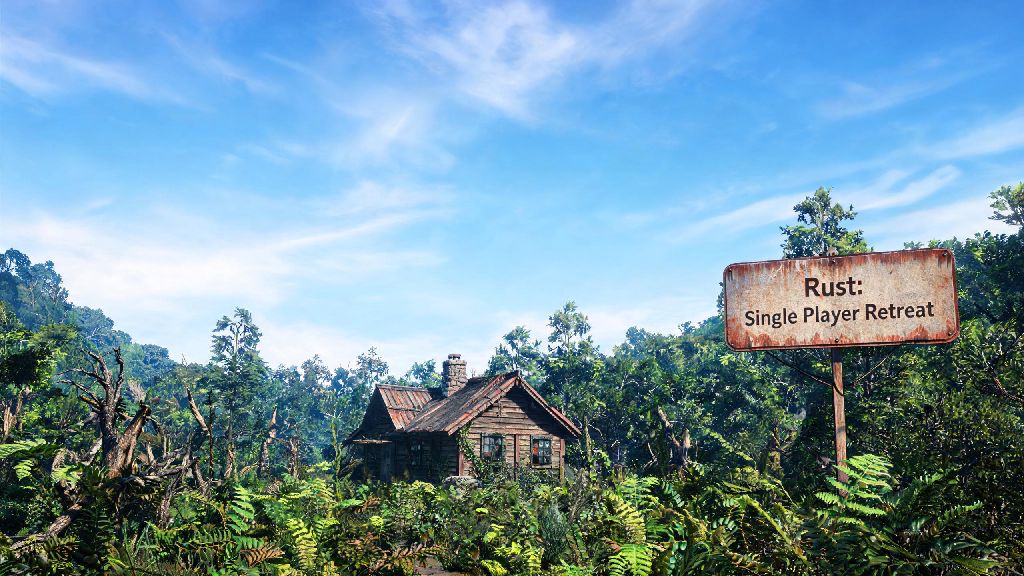
If you’ve ever scrolled through clips of chaotic base raids and tense PvP fights in Rust, you’ve probably wondered if the game is only fun when you’re competing against dozens of other players. A lot of new players avoid giving Rust a try because they assume you have to play with groups or fight sweaty, experienced PvP players every time you log on. If you’re one of those players, you’ve likely asked: can you play single player in Rust? The short answer is yes, and there are multiple ways to do it, whether you want to play fully offline or on a private server only you can access. This guide will walk you through every part of single player Rust, from setup to gameplay tips that make the experience worth your time.
Can You Play Single Player in Rust Offline, or Do You Need an Internet Connection?
You don’t need an active internet connection to play single player Rust, as long as you’ve already downloaded the base game to your device. The game has a built-in local server option that runs entirely on your computer, so you don’t have to connect to external servers or pay for a third-party hosting service to play solo. Your single player progress is saved locally on your device, separate from any online server progress you make, so you don’t have to worry about losing your solo base when you log into public servers later.
You don’t need any prior server hosting experience to set up basic single player Rust, since the in-game menu walks you through all core settings in 3 clicks or less. If you want to add mods to your single player playthrough, you can download them through the official Steam Workshop first, then enable them directly in the host menu before you launch your server. The only time you’ll need internet for single player Rust is if you want to download new mods or share your private server with friends later on.
Key Differences Between Single Player Rust and Public Online Servers
The most obvious difference is the lack of other human players, which changes nearly every part of the core Rust experience. You won’t have to worry about coming back to a raided base after a few days away, and you won’t get randomly killed by a player hiding in a bush while you’re chopping wood. You also have full control over nearly every gameplay setting, from resource respawn rates to NPC spawn frequency to radiation levels across the map.
Single player Rust is completely customizable, so you can tweak nearly every gameplay rule to fit your playstyle. If you hate spending hours gathering resources, you can turn up gather rates to 10x so you can build a base in minutes. If you don’t want to deal with harsh environmental hazards, you can turn off cold damage or radiation entirely. For players who want extra challenge, you can turn up NPC damage or spawn extra hostile animals to keep you on your toes.
That said, single player Rust does lose some of the chaos that makes the game famous for many players. You won’t get random trade offers from passing players, or have to defend your base from a coordinated group raid, or stumble on a random PvP fight for control of a monument. I’ve found that single player is perfect for learning the game’s crafting and building mechanics without the pressure of being killed every 10 minutes, which is why I recommend it to every new player before they jump into public servers.
Step-by-Step to Set Up Your First Single Player Rust Server
Setting up a basic vanilla single player Rust server takes less than 5 minutes, even if you’ve never hosted a game server before. Follow these simple steps to get started:
If you want to use mods for your single player playthrough, make sure you install them to your Rust game files through the Steam Workshop before you open the host menu. You’ll see a list of installed mods in the host menu, where you can toggle them on or off for your playthrough. Always save your world before exiting the game, as unexpected crashes can delete hours of progress if you don’t save manually. Your save files are stored locally, so you can back them up to a cloud drive if you want to make sure you never lose your base.
You can also switch your single player server to a private multiplayer server later if you want to invite friends to play with you. All you have to do is change the server type from single player to private in the host menu, and share your local IP address with the people you want to join. Just note that you’ll need a stable internet connection for other players to connect to your local server.
Pros and Cons of Playing Single Player Rust
Single player Rust is a great fit for some players, but it’s not for everyone. It’s important to weigh the benefits and downsides before you sink hours into a solo world, so you know it’s the right fit for what you want out of the game.
The biggest benefits of single player Rust include the total lack of pressure, full customization control, and the ability to learn at your own pace. You don’t have to rush to build a secure base before night falls, and you can experiment with different building designs or crafting recipes without losing all your loot if you make a mistake. You can also play for 15 minutes or 3 hours whenever you want, without worrying about your base being raided while you’re offline.
The downsides mostly come down to lack of variety and challenge. Without other human players, the only threats are NPCs and environmental hazards, which can get predictable after a few weeks of play. A lot of endgame content, like the cargo ship event or attack helicopter, is designed for groups of 3+ players, so it can feel tedious or impossible to complete alone. You also miss out on the random, unscripted social moments that make public Rust so memorable for many players, like running into a friendly player who gives you free loot or teaming up with a stranger to take down a common enemy.
Single player Rust is best for new players or casual players who don’t have time to keep up with the fast pace of public servers. It’s also a great option if you just want to relax and build without the stress of PvP. If you’re looking for high-stakes PvP and unpredictable gameplay, single player Rust probably won’t hold your attention for long, and you’re better off starting with a low-population public server instead.
Rust is a surprisingly flexible game that works for all types of players, whether you want to fight 20 other players for control of a monument or build a quiet farm in the woods by yourself. If you’ve been on the fence about trying Rust because you don’t like competitive multiplayer, it’s good to know that you can play single player in Rust without jumping through complicated hoops. Start with default settings to get a feel for the game, then tweak the rules as you learn what you like. You might even find that you prefer solo play over the chaotic public servers that the game is most famous for.