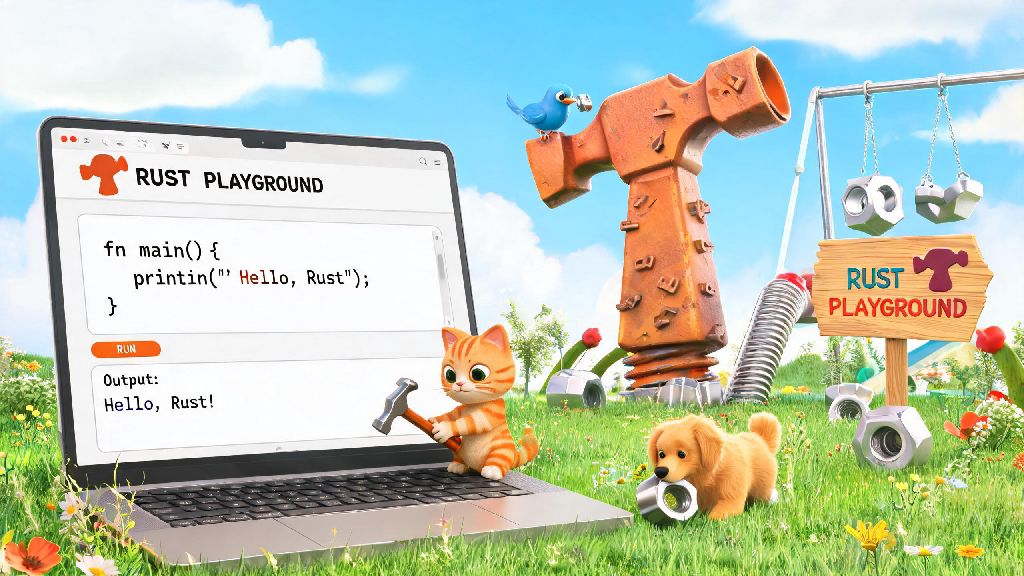
You’ve probably heard Rust praised for its speed, memory safety, and huge community of dedicated developers. But you don’t have to be building enterprise software or working through a 10-week bootcamp to engage with the language. If you’ve asked yourself “how can i play rust” without the pressure of formal learning or job requirements, you’re in the right place. Most people start experimenting with Rust for small, silly, or personal projects first, and that’s actually one of the best ways to get comfortable with its unique rules.
How Can I Play Rust With Zero Prior Coding Experience?
You don’t need years of coding experience to mess around with Rust, and you don’t even have to install anything on your computer to get started. The Rust Playground is a free, browser-based tool that lets you write, run, and debug Rust code in seconds, no setup required. It comes preloaded with all the standard libraries and common crates, so you can jump straight to the fun part without dealing with environment configuration headaches.
If you don’t know any Rust syntax yet, start with pre-written sample snippets you can find on public forums or community hubs. Try changing small parts of the code to see what happens: swap out text strings, adjust number values, or add extra lines of output to see how the compiler reacts. The Rust compiler is famous for its incredibly clear error messages, so even if you break something, it’ll tell you exactly what went wrong and how to fix it most of the time. I first started playing with Rust in the playground when I was bored on my lunch break, and I didn’t write a full local project for almost three months after that.
Fun Low-Stakes Projects to Try When Playing With Rust
You don’t have to build a full web server or operating system to have fun with Rust. Small, hyper-personal projects are the best way to play without stress, and you can finish most of these in under two hours even if you're still learning basic syntax. You don’t have to share any of them if you don’t want to, either—they can just be for your own amusement.
The best part about these projects is that you don't have to make them perfect. If your folder sorter only works 80% of the time, or your text game has a few broken paths, that's totally fine. You're playing, not building a product for paying users. I once built a CLI tool that only generates random bad dad jokes, and I still use it to annoy my friends in group chats to this day. Playing with Rust is all about prioritizing fun over perfection, so even if you only finish half of a project, you’re still getting something out of the experience.
Tips to Make Playing Rust Less Frustrating for New Users
Rust has a reputation for having a steep learning curve, but that only applies if you're trying to master it for professional use. When you're just playing, you can skip most of the complex rules until you're ready for them, and there’s no prize for doing things the “right” way on your first try. The whole point is to have fun, so cut yourself some slack when things break.
First, don't fight the borrow checker unless you want to. If you get a borrow error that doesn't make sense, just clone the value and move on. You don't need to optimize for memory efficiency when you're building a joke generator. Second, use pre-built crates for everything. The Rust ecosystem has thousands of pre-built crates that handle all the boring work for you, so you don't have to write a JSON parser or random number generator from scratch. Just pull the most popular crate for the job and focus on the fun part of your project. Third, join casual Rust communities if you get stuck. There are tons of Discord servers and Reddit threads dedicated to beginner Rust users, and most people are happy to help you fix a small bug without judging you for not knowing advanced concepts. You'll find that most people in the Rust community love seeing people play with the language for fun, not just work.
How to Turn Casual Rust Play Into More Advanced Learning If You Want
You don't have to ever turn your Rust play into formal learning, but if you start to get curious about more complex features, there's no pressure to follow a strict path. Lots of people start playing with Rust for fun and end up using it for side gigs, personal projects, or even full-time jobs later on, but that’s totally optional. You can keep building silly little tools forever if that’s what makes you happy.
If you built that folder sorter tool and use it every day, you might want to add new features like automatic cloud backups or custom rule sets, which will push you to learn more advanced Rust concepts over time. Rust's official book is a great resource to reference when you hit a wall, but you don't have to read it cover to cover. Just look up the specific chapter that relates to the feature you're trying to add, and go back to playing when you're done. I've been using Rust for four years, and I still haven't read the entire official book. I only look up sections when I'm working on a project that needs that specific knowledge, and that's worked perfectly for me. You also might want to join casual game jams or hackathons for Rust users, which let you build fun small projects with other people in a low-pressure environment. You don't have to win, you just get to mess around and learn from other people who also like playing with Rust.
At the end of the day, there's no right or wrong way to engage with a programming language. If you've been wondering how can i play rust, the only real rule is to work on things that feel fun and interesting to you. You don't have to meet any arbitrary milestones, build anything useful, or ever use the language for work if you don't want to. Mess around, break things, laugh at the compiler's silly error messages, and build the dumb little projects that make you happy. That's exactly what playing with Rust is supposed to be.