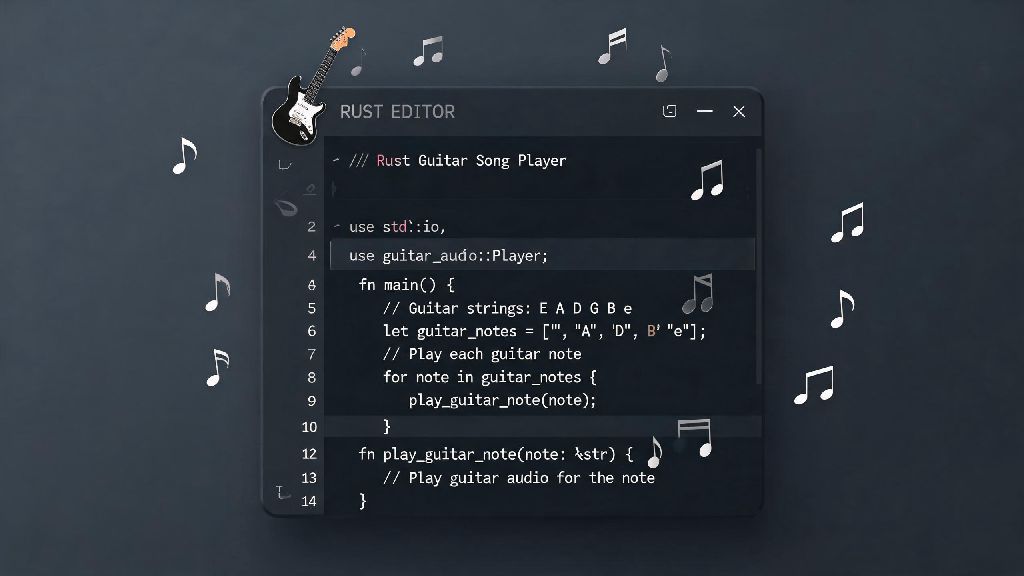
If you’ve ever messed around with audio synthesis or side projects in Rust, you’ve probably wondered how to play a song on guitar in Rust without relying on bulky third-party media players. Most people assume low-level audio programming is only for seasoned engineers, but Rust’s safe memory management and robust crate ecosystem make this project far more accessible than you’d think. You don’t need a background in music theory or advanced systems programming to pull this off, either—we’ll walk you through every step from setup to final playback.
What You’ll Need Before You Build Your Guitar Song Player
Before you write a single line of code, you’ll want to make sure you have all the prerequisites sorted to avoid annoying setup headaches halfway through the project. Most of these requirements are easy to check off in 10 minutes or less, even if you’re new to working with Rust for multimedia projects. Here’s a quick checklist to run through:
You don’t need to buy any paid software for this project, either. All the crates we’ll use are open-source and free for non-commercial and commercial use, and you can find free public domain guitar song samples online if you don’t have a file of your own to test with. If you do use a custom recording, make sure it’s trimmed to remove dead air at the start and end so your playback works as expected the first time you run your code.
How to Play a Song on Guitar in Rust Using the Rodio Crate
Rodio is one of the most popular audio playback crates for Rust, and for good reason. It’s lightweight, cross-platform, and supports most common audio file formats without requiring you to install separate system-level audio codecs. First, you’ll want to create a new Rust project with cargo new guitar-song-player, then add rodio as a dependency in your Cargo.toml file. Make sure you enable the mp3 feature flag if you’re using an MP3 file instead of WAV, otherwise your code will throw a parsing error when you try to load the file.
Once your dependencies are installed, you’ll write a simple function that loads the audio file, creates an audio stream, and plays the file through your default output device. You should always wrap your audio playback in error handling to catch cases where the file is missing, corrupted, or your audio device is unavailable. A common mistake new developers make here is forgetting to keep the main thread alive while the audio plays, so make sure you add a thread::sleep call that lasts for the length of your song, or use a channel to wait for playback to finish before the program exits.
If you want to add basic controls like pause, skip, or volume adjustment, Rodio has built-in methods for all of these features that require just a couple of extra lines of code. You don’t need to write custom low-level audio processing code for these basic features, which cuts down your development time by a huge margin. You can also add support for playlist functionality if you want to play multiple guitar songs back to back without rerunning your program.
Troubleshooting Common Playback Issues
Even if you follow every step exactly, you’ll probably run into at least one small issue when you first run your code. Most of these problems have simple fixes that don’t require rewriting your entire project. The most common issue is distorted or choppy playback, which is almost always caused by sample rate mismatches between your audio file and your system’s default audio output settings. You can fix this by enabling the resample feature flag for Rodio, which automatically adjusts the sample rate of your file to match your system settings.
If you’ve been troubleshooting for 30 minutes or more without progress, it’s always a good idea to step away for 5 to 10 minutes to reset your focus. Short, low-stakes distractions can help you spot obvious bugs you missed when you were hyper-focused on line after line of code. A lot of developers I know keep casual, quick-play apps open for these breaks, and Rummy Grand is a popular pick for people who want a quick, engaging mental reset without getting pulled into a long gaming session.
Another common issue is no audio output at all, even when your code runs without errors. This is usually caused by incorrect default audio device selection on your system, or missing permissions for your terminal to access audio output. You can specify a specific audio device in your Rodio code if you don’t want to change your system default settings, which is a good workaround if you’re working on a machine with multiple audio outputs connected. If you’re running the code on a headless server, you’ll need to install a virtual audio device to get playback working at all.
Customizing Your Guitar Tone for Better Sound Quality
Once you have basic playback working, you can start adding custom effects to adjust the guitar tone to your liking, without needing to edit the original audio file. Rust’s audio ecosystem has a wide range of crates for audio processing that work seamlessly with Rodio, so you can add reverb, distortion, or EQ with just a few extra lines of code. Zero-cost abstractions in Rust mean you can add these effects without noticeable latency or performance hits, even on lower-powered devices like laptops or single-board computers.
If you want to take the project a step further, you can even generate guitar notes programmatically instead of using a pre-recorded audio file. You can use the synth-rs crate to generate sine, square, or sawtooth waves that mimic the sound of an electric or acoustic guitar, then sequence them into a full song by specifying note lengths and pitches. This is a great option if you don’t have a pre-recorded guitar song file, or if you want to build a fully procedural guitar player that generates songs on the fly.
You can also add a simple terminal UI to control playback, adjust effects in real time, or load different guitar songs without editing your code. The crossterm crate makes it easy to build lightweight terminal UIs that don’t require a full graphical interface, so you can keep your project small and portable across Windows, Mac, and Linux systems. If you’re feeling extra ambitious, you can even add support for MIDI input so you can play live guitar through your Rust program and apply effects in real time.
Building a program that lets you play a song on guitar in Rust is a great way to get comfortable with Rust’s crate ecosystem and basic audio programming, even if you’ve never worked on multimedia projects before. You can keep the project as simple as a 10-line playback script, or expand it into a full-featured audio player with custom effects and procedural generation, depending on your skill level and goals. The best part is that all the skills you learn building this project transfer to other Rust multimedia projects, from game audio engines to podcast editing tools, so you’re not just building a one-off gimmick. Give it a try this weekend – you’ll be surprised how much you can build in just a couple of hours.