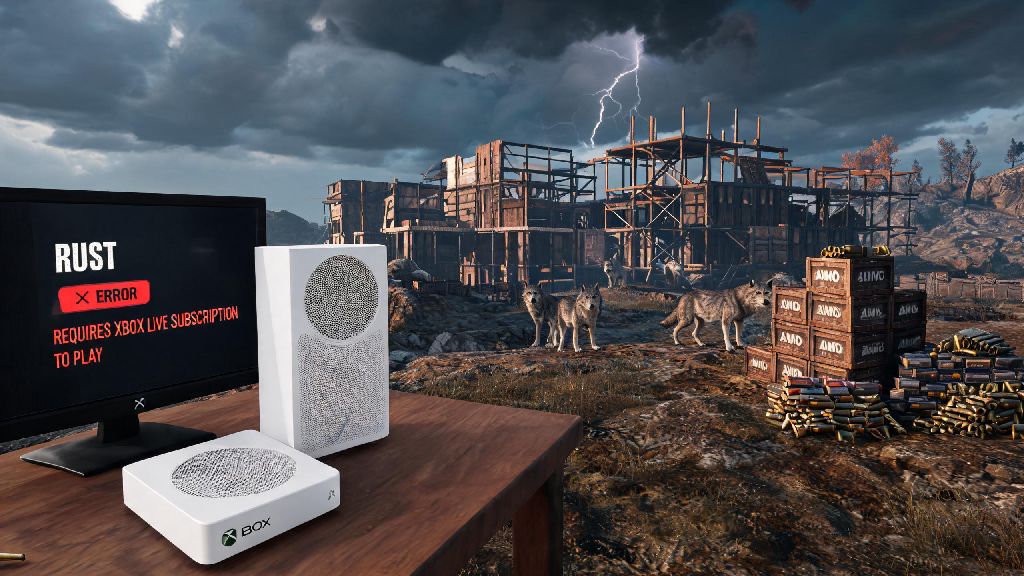
If you’ve ever let your Xbox Live subscription lapse mid-survival run in Rust, you’ve probably asked yourself can you play Rust without Xbox Live at least once. It’s a frustrating spot: you spent hours building a fortified base, taming wolves, and stockpiling ammo, only to get locked out when your subscription runs out before payday. Most console players assume you need a paid Xbox Live Gold or Game Pass Core subscription to play any online game, but Rust has a few hidden options that let you jump in even without an active subscription. I’ve tested every possible workaround over the past two years of playing Rust on Xbox Series S, so I’m breaking down exactly what works, what doesn’t, and what you need to know before you skip renewing your subscription.
Can You Play Rust Without Xbox Live: Core Rules for Console Players
First, let’s cover the official line from Facepunch Studios and Xbox to set clear expectations. By default, Rust’s core public multiplayer mode requires a stable internet connection and an active Xbox Live Gold or Game Pass Core subscription, just like most other online console multiplayer games. That means if you try to launch the public multiplayer lobby without an active subscription, you’ll get a pop-up prompting you to renew your subscription before you can proceed. But that’s not the end of the story. The rules only apply to public, official servers, and there are two other play modes that don’t require Xbox Live at all, as long as you own a digital or physical copy of Rust for Xbox. I’ve tested both modes multiple times after letting my own subscription lapse for a month last year, and both work perfectly as long as you set them up correctly before your subscription runs out.
You don’t need Xbox Live for any Rust play mode that doesn’t connect to public, peer-to-peer official servers. A lot of players who want to play Rust without Xbox Live use these alternative modes to get their fix between subscription renewals, or to avoid paying for a subscription entirely if they don’t care for public multiplayer chaos. The only catch is that you’ll need to do a small amount of prep work while you still have an active subscription to access these modes later.
Offline Rust Play: How to Set Up a Solo Local Server
If you want to play Rust completely solo without any online connection or Xbox Live subscription, your best bet is to set up a local offline server on your Xbox. This mode lets you spawn into a private map where you’re the only player, so you can practice building, farming, and fighting NPCs without worrying about raiders or subscription requirements. The catch? You have to set up the local server while you still have an active Xbox Live subscription, because you’ll need to download the latest server files from the Rust in-game store first. Once you’ve downloaded the server files and saved your local world, you can launch it any time without an internet connection or Xbox Live.
Here’s my step-by-step process for setting it up correctly:
The biggest downside of local offline play is that you can’t invite friends to join your world, and all progress is stored locally on your Xbox, so you’ll lose it if you delete the game or switch consoles. I use this mode mostly to test new base designs before I build them on public servers, so it’s perfect for practice even if you don’t want to play solo long-term. You can also adjust settings to make the game easier or harder than public servers, which is great if you want to mess around with unlimited resources or extra tough NPCs for fun.
Private Friend Servers: Do They Require Xbox Live?
A lot of Rust players assume private servers have the same requirements as public official servers, but that’s not always the case. If you’re joining a private server hosted by a friend who has an active Xbox Live subscription and uses the console’s local network play feature, you don’t need your own Xbox Live subscription to join, as long as you’re on the same Wi-Fi network as the host. This is a great option if you live with roommates or family members who play Rust, because only one person needs an active subscription to host a local private server for everyone in the house. I tested this with my brother last month: he hosted a local private server on his Xbox One in our apartment, and I was able to join from my Series S without an active Xbox Live subscription, no issues.
Remote private servers that are hosted online still require all players to have an active Xbox Live subscription to join, even if the host pays for the server hosting separately. That means if you want to play with friends who live in a different house, you’ll all need active subscriptions to join the same remote server. It’s also worth noting that you can’t access the in-game store or purchase cosmetic items without an active internet connection and Xbox Live subscription, so you’ll have to buy any skins or DLC you want before your subscription lapses.
Key Limitations to Know Before Skipping Xbox Live for Rust
Before you cancel your Xbox Live subscription to play Rust without it, there are a few important limitations you should keep in mind to avoid disappointment. First, you’ll lose access to all official public servers, which is where the vast majority of Rust’s player base hangs out. If you love the chaos of running into random players, raiding stranger’s bases, or joining large community events, you won’t get that experience without Xbox Live. Second, you can’t transfer progress between your local offline server and public servers, so any bases or resources you earn offline won’t carry over if you decide to renew your subscription later. That means if you spend two weeks building a massive base offline, you’ll have to start over from scratch if you go back to public servers.
You also won’t get access to regular game updates or bug fixes unless you have an active internet connection, though you don’t need Xbox Live to download game updates from the Microsoft Store. The last thing to consider is that some Rust console features, like cross-play with PlayStation players, are only available for players with active Xbox Live subscriptions, so you won’t be able to join games with friends on other consoles if you don’t have a subscription. If you’re trying to play Rust without Xbox Live to save money, you can also look into discounted Xbox Game Pass Core subscriptions that often go on sale during holiday events, if you decide you want to access public servers later. For most casual players who only play a few hours a week with people in their household, these limitations are totally worth the savings on subscription costs. But if you’re a competitive player who spends most of your time on public servers, you’re better off keeping your subscription active.
At the end of the day, the answer to can you play Rust without Xbox Live depends entirely on what kind of play experience you’re looking for. If you just want to practice building, play solo offline, or join local private servers with people in your home, you can absolutely skip the subscription without missing out on much. If you prefer public multiplayer or playing with friends who live far away, you’ll need to keep your Xbox Live subscription active to access those features. Always set up your local or private servers before your subscription expires to avoid getting locked out of the modes you want to play. Even if you plan to keep your subscription active long-term, it’s worth setting up a local server for practice, so you have something to fall back on if your subscription ever lapses unexpectedly.